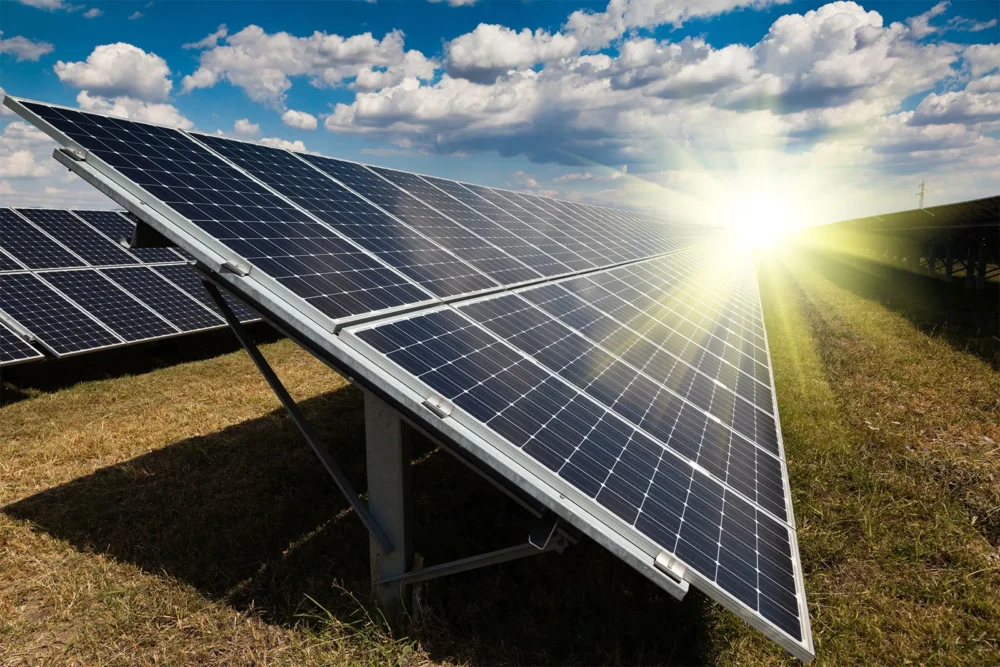
The cost of installing solar at home depends on much more than system capacity. A 1kW installation will generally cost less than a 5kW system, but the final quotation also depends on the solar panels, inverter, mounting structure, electrical work, installation and other components included.
Government support can reduce the upfront cost for eligible residential rooftop installations. Under the PM Surya Ghar: Muft Bijli Yojana, the current central subsidy structure provides ₹30,000 per kW for the first 2kW and ₹18,000 for the additional capacity up to 3kW. The maximum central subsidy is therefore ₹78,000 for an eligible residential system of 3kW or more. That makes it useful to separate three things when comparing a home solar system cost: the system’s capacity, the price of the complete installation and the subsidy for which the installation qualifies.
Solar subsidy from 1kW to 5kW
The current central subsidy structure is straightforward:
| Solar system capacity | Central subsidy calculation | Maximum central subsidy |
| 1kW | ₹30,000 × 1 | ₹30,000 |
| 2kW | ₹30,000 × 2 | ₹60,000 |
| 3kW | ₹60,000 + ₹18,000 | ₹78,000 |
| 4kW | Subsidy capped after 3kW | ₹78,000 |
| 5kW | Subsidy capped after 3kW | ₹78,000 |
dential consumers under the PM Surya Ghar programme. It is not a blanket discount on the price of solar panels. The installation must meet the applicable programme requirements, and the subsidy process involves installation and verification through the prescribed mechanism.
State-level incentives may also be available in some locations, but these vary by state and should be checked separately rather than added to a national cost calculation.
What does a complete solar system include?
A quotation for a rooftop installation should cover more than the modules mounted on the roof.
| Component | What it does | Why it affects cost |
| Solar panels | Converts sunlight into DC electricity | Capacity and panel technology vary |
| Solar inverter | Converts and manages electricity for household use | Capacity and system type affect selection |
| Mounting structure | Secures panels to the roof | Depends on roof and installation conditions |
| Cables and protection | Connect and protect the system | Required for safe installation |
| Installation | Mounting, wiring and commissioning | Site conditions influence labour and scope |
| Monitoring | Tracks system performance where supported | Depends on the equipment and platform |
This is why multiplying a single solar panel price by the number of panels does not produce a reliable complete-system cost.
How much does a 1kW solar system cost?
A 1kW rooftop system is generally suited to households with relatively modest electricity consumption. MNRE’s published guidance gives 1–2kW as an indicative suitable range for households consuming around 0–150 units per month. It is a starting point rather than a substitute for an individual assessment.
The actual 1kW project price depends on the equipment selected and the installation. A quotation may include panels, an inverter, mounting, wiring, protection equipment and installation. For an eligible residential installation, the central subsidy at 1kW is ₹30,000.
What changes at 2kW?
A 2kW system can be relevant to a household with greater electricity consumption or a larger usable roof area. MNRE’s indicative guidance places 2–3kW in the range for households consuming around 150–300 units per month. The applicable central subsidy rises to ₹60,000 at 2kW.
At this point, homeowners should pay attention to the inverter as well as the panels. The inverter needs to be compatible with the planned solar array and the home’s electrical configuration. The total project quotation should make clear which panel and inverter models are being supplied rather than simply stating “2kW solar system.”
3kW solar system: Where the central subsidy reaches its maximum
A 3kW installation is significant under the current subsidy structure because it reaches the maximum central residential CFA of ₹78,000.
MNRE’s published guidance associates 2–3kW systems with households consuming around 150–300 units per month, while consumption above 300 units may require systems above 3kW. Actual sizing depends on the household’s electricity use and site conditions.
A 3kW system receives up to ₹78,000 in central CFA if eligible. A 4kW or 5kW system does not receive ₹18,000 or ₹30,000 more for each additional kilowatt under this central subsidy structure.
Note: The important point is that the subsidy does not continue increasing at the same rate above 3kW.
What happens with a 4kW or 5kW system?
A larger system can make sense for a household with higher electricity consumption, sufficient roof area and an economic case for generating more solar energy. However, the additional capacity comes with additional equipment cost, while the central subsidy remains capped at ₹78,000.
| System size | Indicative consumption range from MNRE guidance | Central subsidy | What changes |
| 1kW | 0–150 units/month | ₹30,000 | Lower generation capacity |
| 2kW | 150–300 units/month | ₹60,000 | Higher generation capacity |
| 3kW | 150–300 units/month* | ₹78,000 | Maximum central CFA reached |
| 4kW | Above 300 units/month may warrant larger capacity | ₹78,000 | Extra capacity beyond subsidy ceiling |
| 5kW | Above 300 units/month may warrant larger capacity | ₹78,000 | More generation, but no additional central CFA |
*MNRE’s consumption bands are indicative and should not be treated as fixed sizing rules.
A 5kW system therefore should not be described as “₹78,000 cheaper” than a smaller system. The subsidy reduces the eligible cost, but the larger system still requires additional investment.
What does an on-grid home solar system cost?
For households primarily looking to reduce grid electricity purchases, an on-grid home solar system can be an appropriate configuration.
An on-grid system connects the solar array to the electricity grid through a grid-tied inverter. Solar electricity can be used by the home, while surplus generation may be exported according to the applicable regulatory and net-metering arrangement.
An important limitation is that a standard on-grid system is not automatically backup power during a grid outage. Grid-tied systems have anti-islanding requirements, meaning they generally stop supplying the grid when the grid is unavailable.
Why solar panel prices vary
A homeowner comparing panels may encounter substantially different prices even for modules with similar headline wattages.
That can happen because of differences in:
- Cell technology
- Module capacity
- DCR or non-DCR configuration
- Bifacial or monofacial design
- Warranty
- Construction
- Certification and applicable approvals
- Retail offers and availability
A better way to compare solar system quotations
Rather than asking only “How much does a 5kW solar system cost?”, ask for a component-level quotation.
| Compare | What to check |
| Panels | Brand, model, technology, wattage and quantity |
| Inverter | Model, rated capacity and system type |
| Structure | Material, design and installation scope |
| Electrical work | Cables, protection and related equipment |
| Installation | Labour, commissioning and site work |
| Monitoring | Included equipment and functionality |
| Warranty | Separate terms for panels and inverter |
| Subsidy | Eligibility and expected CFA |
| Net metering | Application and approval responsibility |
This makes it much easier to compare two quotations that appear similar on the surface.
For example, one 5kW quotation might include a higher-capacity panel configuration but a different inverter and installation scope. Another might use different panel technology or include additional electrical equipment. The headline price alone cannot show which represents better value.
How should you estimate your system size?
Start with electricity consumption rather than the subsidy. Review recent electricity bills and identify how much electricity the home uses each month. Then consider roof area, shading, sanctioned load and whether the priority is electricity-bill savings, backup or both.
MNRE’s published guidance gives indicative system sizes based on monthly consumption, but a site-specific assessment remains important. The type of solar system matters too. Known brands such as Luminous currently distinguishes its residential solutions as:
| Configuration | Main components | Primary purpose |
| On-grid | Solar panels + grid-tied inverter | Bill savings and grid-connected solar |
| Off-grid | Solar panels + off-grid inverter + battery | Solar generation with battery-based operation |
| Hybrid | Solar panels + hybrid inverter + battery | Solar savings plus battery backup |
This distinction is particularly important if a homeowner expects electricity during power cuts. An on-grid installation and a battery-backed hybrid or off-grid system serve different purposes.
What is the realistic way to think about solar cost?
There is no single India-wide price for a 1kW, 2kW, 3kW, 4kW or 5kW rooftop installation. Equipment choices, installation conditions and local quotations all influence the final amount. The most reliable approach is therefore to obtain a detailed quotation, confirm solar panel subsidy eligibility, check exactly which components are included and calculate the net amount payable after applicable financial assistance. That gives a far more realistic picture of home solar system cost than relying on a single advertised package price.